
November 9,2026
Diwali is here and so is the desire to shop till you drop.This is what we need to guard against.
For consumers who stretched their budgets to make the most of Diwali, the next few months could be about repairing their finances.
The Diwali celebrations may be over, but for many households, the financial consequences are only beginning to show up. Credit card bills, festive EMIs and buy-now-pay-later payments can turn a few days of shopping into months of repayments.
The scale of festive spending this year offers an interesting backdrop. The Confederation of All India Traders (CAIT) expects festive trade to cross Rs 7 lakh crore, against its estimate of Rs 6.05 lakh crore for 2025. That translates into roughly 16 per cent growth in nominal terms.
However, higher spending does not necessarily mean households are financially better off. Wholesale inflation stood at 11.4 per cent and retail inflation at 5.5 per cent in September, suggesting that rising prices account for a significant part of the increase in trade.
Also Read | Layoffs Are Rising In Tech, But These Skills Are Helping People Unlock Better Pay
A LocalCircles survey of urban households points to a more cautious consumer. It estimated festive spending at Rs 1.97 lakh crore, down 6 per cent, and found that 83 per cent of spending households dipped into savings.
The gap between these estimates highlights an important question: What happens to household finances after the festive shopping rush?
For consumers who stretched their budgets to make the most of Diwali, the next few months could be about repairing their finances rather than making fresh purchases. Gaurav Garg, Head – Research, Lemonn, told NDTV that the first step towards financial recovery is understanding how much has actually been spent and what remains to be paid.
How To Deal With The Diwali Spending Hangover
The good news is that a festive spending hangover does not have to become a financial headache that lasts until the next festival. A few deliberate steps can help households regain control of their money before the next set of bills arrives.
Gaurav Garg, Head – Research, Lemonn, recommends starting with a complete assessment of festive expenses. This means looking beyond the shopping bills and accounting for every financial commitment made during the festival.
Step 1: Add Up Every Festive Purchase And EMI
The first step is to understand how much Diwali actually cost. Credit card statements, personal loans, buy-now-pay-later purchases and EMIs should all be listed together. This gives households a clearer picture of how much money has already been spent and how much remains payable.
|
What To Check |
|
|
Total outstanding, payment due date and interest |
|
|
EMIs |
Monthly instalments and remaining tenure |
|
Pending payments and due dates |
|
|
Outstanding principal and interest rate |
|
|
Amount withdrawn for festive purchases |
Garg said consumers should not underestimate smaller purchases simply because they are spread across different payment methods. Several modest EMIs can collectively become a sizeable monthly commitment.
Step 2: Clear The Most Expensive Debt First
Once the spending is mapped, the priority should be to eliminate the costliest borrowing. Credit card debt deserves particular attention. Paying only the minimum amount due may keep the account from becoming immediately overdue, but it does little to reduce the outstanding principal.
Credit card interest can range between 2.5 per cent and 4 per cent a month, depending on the issuer and card. That can translate into an annualised cost of roughly 30 per cent to 48 per cent, before considering compounding and other charges.
|
What Consumers Should Know |
|
|
Best option to avoid revolving interest |
|
|
Compare interest, processing fees and tenure |
|
|
Check transfer fees and promotional interest periods |
|
|
Consider only if the effective borrowing cost is lower |
|
|
Avoid carrying the balance for several months |
Garg said borrowers who cannot clear their entire credit card bill should compare alternatives before allowing the outstanding amount to revolve. A cheaper personal loan or balance transfer may reduce the interest burden, but consumers must account for processing fees, taxes and repayment conditions before switching.
Step 3: Put A Cap On Monthly Repayments
Festive purchases can make the next few months financially uncomfortable, especially when several EMIs begin together. A useful benchmark is to keep total monthly debt repayments within 40 per cent to 50 per cent of take-home income. This includes existing loan instalments and new festive commitments.
|
50% Repayment Limit |
||
|
Rs 15,000 |
||
|
Rs 25,000 |
||
|
Rs 37,500 |
||
|
Rs 50,000 |
Garg said consumers should avoid taking fresh loans simply to maintain their usual lifestyle after Diwali. The focus should instead be on reducing existing liabilities and protecting monthly cash flows.
Step 4: Rebuild The Emergency Fund Before Increasing Investments
Festive shopping often comes at the expense of household savings. A LocalCircles survey estimated urban festive spending at Rs 1.97 lakh crore in 2026, down 6 per cent from 2025. However, 83 per cent of households planning festive purchases expected to dip into savings to some extent. That makes rebuilding the emergency fund particularly important.
Financial planners generally recommend keeping three to six months of essential expenses in an emergency fund. This money should be readily accessible and not exposed to market volatility. For households that used savings for Diwali, rebuilding this buffer can take priority over increasing discretionary spending or making fresh investments.
Step 5: Don’t Stop SIPs Blindly, But Don’t Ignore Expensive Debt
The festive season also coincides with a period when many investors continue their systematic investment plans (SIPs). Monthly SIP inflows remained strong through the October-December 2025 quarter, with December recording Rs 31,002 crore. September 2026 saw SIP contributions reach another record of Rs 32,490 crore.
However, investment discipline should not come at the cost of expensive borrowing. Garg said households carrying revolving credit card debt should prioritise clearing it before increasing investments. A debt costing 36 per cent to 48 per cent annually can be difficult to offset through investment returns, which are uncertain and never guaranteed. This does not necessarily mean every investor should discontinue an existing SIP. The decision should depend on cash flow, the nature of the debt and the household’s emergency savings.
Step 6: Use The Diwali Bonus To Repair Your Finances
For salaried households receiving a festive bonus, the temptation to make another purchase can be strong. But using the bonus to reduce outstanding debt can provide a more lasting benefit.
Garg recommends directing bonus money towards high-interest liabilities first, followed by rebuilding savings. Any surplus can then be allocated towards planned investments or future expenses.
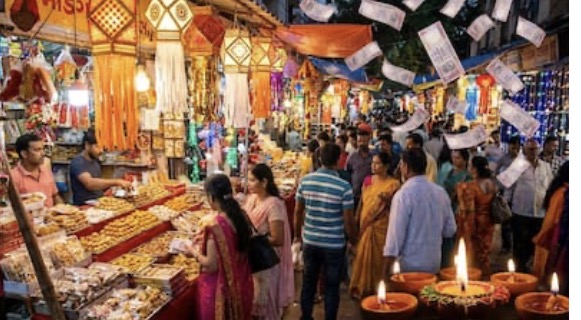
A festive spending hangover does’t have to be a financial headache that lasts until the next festival