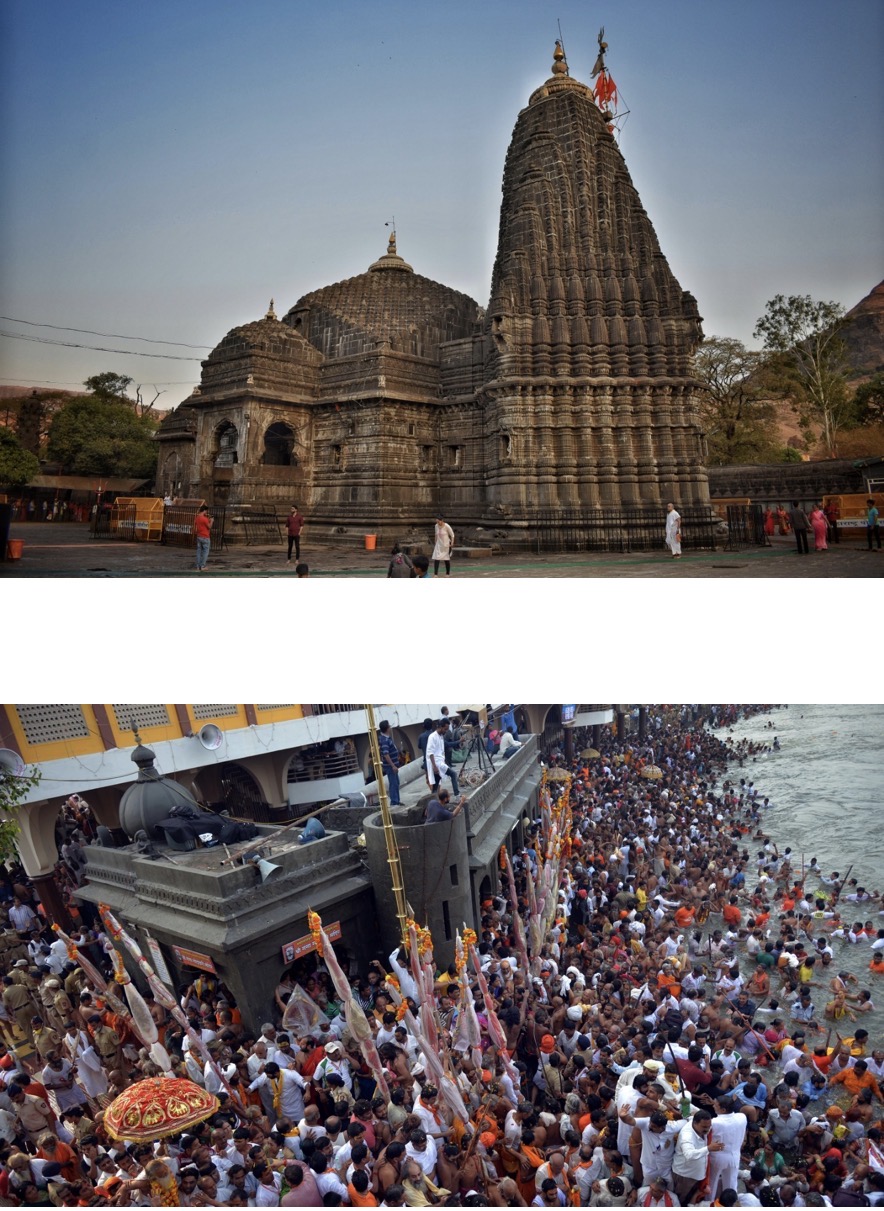
The grand start includes flag-hoisting ceremony on Saturday marks the beginning of the Simhastha period. While the main bathing congregation is in August-September 2027, the formal festival — expected to draw 12 crore devotees — will continue until July 2028.
Read More
President Droupadi Murmu will attend the Dhwajarohan (flag hoisting) ceremony at Nashik and Trimbakeshwar on Saturday (October 31), formally marking the beginning of the Simhastha Kumbh period.
The religious congregation is expected to draw around 12 crore visits over the entire festival, according to the Nashik-Trimbakeshwar Kumbh Mela Authority, making it one of the largest gatherings to be organised in Maharashtra.
The formal Simhastha period will begin on October 31, 2026, with the hoisting of flags at Ramkund in Nashik and Kushavarta Tirtha in Trimbakeshwar. It will continue until July 2028. The main influx of pilgrims, however, is expected around the auspicious bathing dates, or Amrut Snans, in August and September 2027.
What is the Simhastha Kumbh, what is its significance, and why is it held in Nashik?
The Kumbh Mela is a major Hindu religious congregation traditionally held at four locations: Prayagraj, Haridwar, Ujjain and Nashik-Trimbakeshwar. The timing of the gatherings is determined by specific astrological configurations involving Jupiter, the Sun and the zodiac signs.
The Nashik congregation is called Simhastha because it is associated with Jupiter’s entry into Leo, or Simha. According to Hindu astrological tradition, this planetary alignment determines the auspicious period for the gathering and ritual bathing.
The Nashik-Trimbakeshwar Kumbh is held once every 12 years. The previous congregation took place in 2015-16.
The religious significance of the festival is also associated with the legend of Samudra Manthan, or the churning of the ocean. According to Hindu mythology, drops of amrit, or the nectar of immortality, fell at four locations during the struggle between gods and demons over the pot containing the nectar. These locations came to be associated with the four Kumbh centres.
What is the duration of the Kumbh? Does it begin with the flag-hoisting or the first holy bath?
The Dhwajarohan ceremony marks the beginning of the auspicious Simhastha period associated with the Kumbh and the start of the religious and administrative activities leading up to the main congregation.
The festival, which will formally begin Saturday, is scheduled to continue until July 2028, when the flags will be lowered in ceremonies at Trimbakeshwar and Nashik. The published calendar for the closing ceremony at Trimbakeshwar lists July 24, 2028, and at Nashik on July 29, 2028. This makes the overall Simhastha period approximately 21 months.
Ritual bathing is the central religious activity of the Kumbh, and the largest influx of pilgrims is expected around the designated bathing days in 2027.
The main Amrut Snans are scheduled for August 2 and August 31, 2027, at both locations. The third is scheduled for September 11, 2027, in Nashik and September 12, 2027, in Trimbakeshwar.
Apart from these principal bathing occasions, the wider Simhastha calendar includes other auspicious bathing dates and religious events. Sadhus, akhadas (monastic orders), and religious institutions also arrive ahead of the main bathing days, while devotees visit the two centres over an extended period.
How many people are expected to attend? When will the largest crowds arrive?
The Nashik-Trimbakeshwar Kumbh Mela Authority has projected a footfall of around 12 crore devotees over the entire Simhastha period. This is significantly higher than the estimated 2.5 crore pilgrims who visited Nashik during the previous Kumbh in 2015.
The dates are:
August 2, 2027: First Amrut Snan at Nashik and Trimbakeshwar.
August 31, 2027: Second Amrut Snan at both locations.
September 11, 2027: Third Amrut Snan at Nashik.
September 12, 2027: Third Amrut Snan at Trimbakeshwar.
The bathing days are particularly significant because sadhus and members of the akhadas undertake ritual baths in a prescribed order. The processions and ceremonial entry into the water are among the defining features of the Kumbh.
Why are there two bathing centres, Nashik and Trimbakeshwar?
Unlike the other Kumbh centres, the Maharashtra congregation is spread across two locations 30 kms apart, each with its own religious significance.
In Nashik, the principal bathing site is Ramkund, situated on the banks of the Godavari. In Trimbakeshwar, it is Kushavarta Tirtha, a sacred water tank near the Trimbakeshwar Shiva temple, one of the 12 Jyotirlingas.
The Shiva Temple in Trimbakeshwar, one of the 12 Jyotirlingas. In Trimbakeshwar, the bathing centre is Kushavarta Tirtha, a sacred water tank near the temple. Photo: Wikimedia Commons
The division is also rooted in a historical dispute between Shaiva and Vaishnava ascetics over ritual bathing rights. Historical accounts attribute the separate bathing arrangements to the Peshwas, following clashes between the two traditions over precedence in bathing.
Under the arrangement, Vaishnava akhadas were assigned Nashik, while Shaiva ascetics and Udasin akhadas were assigned Trimbakeshwar. The division has since become a distinctive feature of the Nashik Simhastha.
What will happen at the Nashik Kumbh on October 31?
The Dhwajarohan ceremony, to be attended by President Murmu, will mark the formal beginning of the Simhastha period.
Flags will be hoisted at Ramkund in Nashik and Kushavarta Tirtha in Trimbakeshwar. The programme is also expected to include the Godavari aarti, the launch of the Kumbh Mela Authority’s website, release of the official Kumbh song, and unveiling of a commemorative postal stamp and coffee-table book.
The ceremony is distinct from the Amrut Snans, which will take place in August and September 2027. The flag-hoisting marks the beginning of the religious period; the major bathing days will bring the largest concentration of pilgrims.
What is the scale of the government’s preparations?
The Maharashtra government has approved a development plan worth Rs 22,425.39 crore for the Nashik-Trimbakeshwar Simhastha Kumbh. The plan was cleared at a meeting of the Apex Committee chaired by Chief Minister Devendra Fadnavis on March 13, 2026.
The Nashik-Trimbakeshwar Simhastha Kumbh Mela Authority has been established as the nodal agency for inter-departmental coordination, project planning, fund management and execution.
The projects cover road connectivity, transport infrastructure, water supply, sewage treatment, sanitation, riverfront development, and facilities for pilgrims. The administration is also planning command-and-control infrastructure, surveillance systems, and crowd-density monitoring to manage the expected turnout.