
November 5, 2026
Diwali Parties can be tricky or fun it depends how you prepare for them.
Hosting a Diwali party? From make-ahead snacks and easy menus to food safety, here’s how to keep guests happy without spending the evening in the kitchen.Samarpita Yashaswini is a Content Producer for Fashion (HT Shop Now) at Hindustan Times Digital. She has five years of experience in lifestyle writing, specialising in fashion, beauty, and trend-led commerce content.
Read More
She covers everything from seasonal must-haves and wardrobe essentials to brand reviews and styling edits that make everyday dressing easier and more exciting.
She began her writing journey in 2020, but her love for fashion started long before that. Over the years, she has interned with Times Internet and Desi Martini, and worked with Pinkvilla and Schbang, building a strong foundation in digital storytelling and audience-first content. At HT Digital, she writes and creates fashion affiliate content for both the website and social media, blending trend awareness with shopping practicality. Her work sits at the intersection of style and strategy combined with equal parts aesthetic and analytics.
A self-confessed fashion enthusiast, Samarpita has a sharp eye for colours, prints, silhouettes, and textures. She notices the fall of a fabric, the mood of a palette, and the difference a good cut can make. Her expertise lies in translating trends into wearable, relatable style and helping readers shop smarter, not louder.
She studied at Delhi Public School and graduated from Miranda House, University of Delhi in 2019, where she also wrote for the college magazine. She later completed a Postgraduate Diploma in Advertising and PR from MICA, Ahmedabad.
Samarpita believes fashion content doesn’t need to be complicated or overly eloquent. It should be simple, fun, and genuinely helpful, guiding readers through daily style decisions with confidence and joy.
There is a particular kind of Diwali party host who deserves a little extra appreciation. They’re the ones refilling snack bowls, checking whether the paneer tikka is ready, making another round of drinks and rushing to the kitchen just as everyone gathers for photographs.
By the time they finally sit down, half the party is over.
If you’re hosting a Diwali get-together this weekend, I’d argue that the menu deserves as much planning as your outfit, decorations and guest list. Not because you need to put together an elaborate feast, but because you shouldn’t have to spend the entire evening cooking while everyone else is having fun.
The secret is not to make everything from scratch on the day. It’s to choose food that can be prepared ahead, serve a few things that guests can help themselves to and reserve only one or two tasks for the last minute.
Here’s how to plan a festive spread that looks inviting, tastes good and lets you actually enjoy your own party.
First, stop planning a wedding buffet for 15 people
One of the easiest ways to make hosting unnecessarily stressful is to overestimate how much food you need. A Diwali party doesn’t automatically require six starters, three mains, four desserts and a live counter.
Start with your guest list and the kind of gathering you’re hosting. Is it an evening of cards and conversation? A family get-together after Lakshmi Puja? A sit-down dinner? The menu should reflect the occasion.
For a casual evening party, a spread of drinks, savoury snacks, two hot starters, one substantial main dish and a dessert is perfectly reasonable. If guests are coming over after visiting other homes, smaller portions and easy-to-eat bites may work better than a heavy meal.
A recent trend in festive entertaining is the grazing table, with caterers increasingly serving bite-sized food that guests can pick up while mingling. Mini canapés, sliders, skewers and Indian-inspired snack boards are becoming popular alternatives to the conventional buffet.
You don’t need a professional caterer or an elaborate tablescape to borrow the idea. A thoughtfully arranged snack table at home can do the job.
Build a menu that doesn’t demand your attention every five minutes
My approach would be to divide the food into three categories: things you can prepare in advance, things that need minimal assembly and one or two dishes worth serving hot.
Start with a snack table that can look after itself.
This is where you can have a little fun. Instead of putting out several packets of namkeen in their original packaging, arrange chakli, mathri, roasted makhana, masala peanuts, khakra and assorted nuts in separate bowls.
Add a couple of dips, such as mint yoghurt dip and hummus, with crackers, vegetable sticks or pita chips. You could also create an Indian-inspired grazing board with mini samosas, dhokla, cheese cubes, olives, chutneys and bite-sized pieces of mithai.
The idea is to offer variety without making every item a separate cooking project.
Let the drinks serve themselves.
A pitcher of masala shikanji, mint lemonade or a watermelon cooler is easier to manage than making individual drinks whenever someone asks. Prepare the base in advance, refrigerate it and add ice just before serving.
Keep glasses, a water jug, ice and garnishes together at one station. If you’re serving several drinks, label the pitchers so guests know what they’re picking up.
Choose hot starters that don’t need constant supervision.
You don’t need an entire restaurant menu. Pick two favourites, such as paneer tikka and potato wedges, or kebabs and crispy corn. If you have an air fryer or oven, use it to prepare batches rather than standing beside a frying pan all evening.
For a more interesting spread, serve a small portion of each starter on individual platters instead of putting everything into one enormous dish.
Keep the main course familiar.
If you’re hosting dinner, choose dishes that can be prepared ahead and reheated properly before serving. Chole, rajma, dal makhani and certain vegetable gravies are practical options. Pair them with jeera rice and freshly bought rotis or naan.
If it’s a snacks-and-drinks party, you may not need a full main course at all. A generous chaat counter, mini rolls or sliders can be enough, depending on the guest list and timing.
And please don’t feel obliged to make every dish yourself. Ordering a few items from a trusted restaurant or bakery is not cheating. It’s good party planning.
Your Diwali party prep timeline: what to do before guests arrive
The easiest way to avoid last-minute chaos is to spread the work across the days leading up to the party. With Diwali on November 8, here’s a realistic schedule for the final few days.
November 5: Decide the menu and shop
Finalise the guest count, decide whether you’re serving dinner or snacks, and make a shopping list. Buy dry groceries, packaged snacks, beverages and ingredients that can be stored safely.
Check your serving bowls, glasses, plates and cutlery. It is considerably better to discover that you don’t have enough serving spoons today than when guests are standing around the food table.
November 6: Prepare the components
Make dips, chutneys and suitable make-ahead dishes. Prepare marinades for paneer or other starters and refrigerate them. You can also organise dry snacks into serving bowls and label anything that needs to be kept chilled.
If you’re ordering mithai, confirm the delivery or collection time rather than leaving it to the final afternoon.
November 7: Set up the party
Arrange your serving area, table linen, crockery and decorations. Chop ingredients that can be prepared in advance and store them appropriately. Chill beverages and prepare any drink concentrates.
You can also set up a small self-serve station for water and drinks so guests don’t have to keep asking you.
November 8: Keep the cooking manageable
On Diwali day, finish the fresh preparations, arrange the snack table and reheat dishes that were prepared earlier. Keep only the tasks that genuinely need to happen at the last minute.
Give yourself time to get dressed, participate in the puja and welcome your guests. The kitchen can manage without you for a little while.
Make the food table look festive without turning it into a decor project
A grazing table doesn’t need expensive crockery or professional styling. A little thought about colour, height and arrangement can make even familiar snacks look special.
Use serving bowls of different sizes and heights rather than lining everything up in identical containers. Add small labels for dishes, particularly if some contain nuts, dairy or other common allergens.
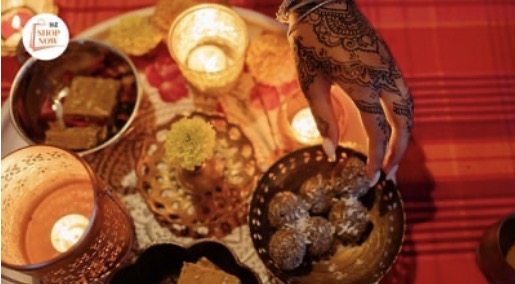
You can bring in a festive touch with marigold flowers, a colourful runner, brass bowls or small decorative elements placed away from the food. Keep the actual serving area uncluttered so guests can reach everything easily.
One idea I particularly like is giving a familiar Indian snack a slightly different presentation. Serve mini kachoris with chutneys, arrange dhokla cubes on skewers or create a small chaat station where guests can customise their plates.
Just remember that presentation should make serving easier, not create another thing you need to manage.
https://www.hindustantimes.com/lifestyle/art-culture/hosting-a-diwali-party-heres-how-to-enjoy-it-without-living-in-the-kitchen-101793857462875.html